24/7 Emergency Tree Services After Storm Damage
When a squall line tears across town at 2 a.m., the damage looks different than a sunny day pruning job. Limbs twist, trunks split, and root plates heave out of wet soil. The work that follows is part rescue, part engineering, and part hazard control. Crews make decisions in minutes that affect safety, property, and long term tree health. As someone who has spent years on storm calls, I can say the clock, the weather, and the physics of wood all have a say.
This guide explains what truly happens during 24/7 Emergency Tree Services after storm damage, how to triage a site, when Tree Removal Services make sense, and where Tree Pruning & Crown Shaping, Tree Cable and Bracing, and Stump Removal & Grinding fit. It also covers the role of a Certified Arborist Consultation, the reality of Dangerous Tree Assessment and Removal, and how FireSmart Tree Services help you prepare before the wind comes howling.
The first hour matters
In the first hour after a storm hits, we handle three things: life safety, utilities, and stabilization. If there are downed conductors or a tree on a service drop, work pauses until the utility declares the line safe. Good companies have a direct utility contact specifically for night operations. We also look for residual hazards that do not announce themselves loudly, like a split leader wedged in a canopy thirty feet up or a loaded hinge holding two tons of wood in a tense balance.
Response times vary with storm size, but for localized events a solid outfit can put boots on the ground in 60 to 120 minutes. Citywide events can stretch that to half a day as calls stack up. Dispatchers triage based on severity: blocked egress, structural compromise, active utility conflict, and public right of way obstructions rise to the top.
When we arrive, our first pass is a site survey. The crew lead walks the property with a flashlight and a rake handle in hand. Tapping wood can reveal hollows, sounding like a drum when decay has eaten the core. You learn to read stress lines in compressed bark, bright fresh cracks in the grain, soil mounds at the base where roots have shifted, and the subtle lean that was not there last week.
What homeowners can do right away
Here is a short, safe set of steps you can take before a crew arrives, as long as there are no downed wires and no immediate danger:
- Keep people and pets out of the drop zone around damaged trees and leaning trunks.
- Photograph damage from a safe distance for insurance, including wide views and close detail.
- Turn off exterior circuits if branches have torn at service masts or meter bases.
- Mark obvious hazards with tape or cones to warn neighbors in the dark.
- Call your insurer and your tree service, then stay reachable with a charged phone and a visible house number.
You do not need to move branches or cut anything yourself. Chainsaws double risk on unstable debris. Shifting one limb can release stored energy in another. We see more secondary incidents from helpful attempts than from waiting an extra hour.
Reading storm damage like a mechanic
Trees fail along predictable lines. A heavy lateral can lever a trunk, torqueing fibers until a fracture snakes down from a poorly closed pruning wound. Shallow rooted species on saturated clay can go over root plate and all. Wind gusts create dynamic loading beyond static weight, especially with leaves acting like sails. After ice storms, the hazard changes to brittle fractures and shear breaks, often hidden in apparently intact canopies.
We inspect four zones: crown, stem, root collar, and soil. Each zone tells a story. A crown dotted with ripped out branches means jagged stubs that cannot compartmentalize well. A stem with spiral cracking suggests torsional failure and likely internal separation. At the root collar, loosened soil, gaps along the trunk, and fungus conks can indicate pre existing rot made worse by wind. In the soil, a lifted side on the windward edge means anchoring roots have failed and the lean will worsen.
The key is not just to see damage, but to understand how loads now travel through the remaining structure. That is what keeps a crew safe while moving wood piece by piece.
Emergency Tree Services versus planned work
In calm weather, pruning and removals happen in a controlled sequence. Storm work adds urgency, darkness, and unknowns, so the methods adapt. You will see rigging anchored to stronger, undamaged trees, portable winches in play, and cranes arriving when the weight and position demand it. Instead of standard climbing routes, we may ascend on a static line to an uninjured neighbor tree, then traverse to the target. On the ground, we set exclusion zones and spotters. Night operations need flood lighting, reflective PPE, and clear hand signals. Every small system, from throw line to lowering device, matters more.
Equipment scales with the job. For most residential storm calls, chainsaws with 14 to 20 inch bars handle limbs, with a 28 to 36 inch bar reserved for large trunk sections. Chippers in the 12 to 18 inch capacity range eat debris quickly, but we avoid feeding compromised pieces that may shatter. When a tree is lying on a roof or car, low impact techniques are non negotiable. We pad contact points with cribbing and plywood, distribute weight with slings, and lower, not drop, each piece. A 30 to 90 ton crane can shorten exposure time and reduce the number of cuts, but crane work requires clean communication and certified operators. The cost is higher, yet often lower than repairing collateral damage from a ground only removal in a tight space.
Dangerous Tree Assessment and Removal
Not every broken tree must come down. That said, some are too compromised to save. Dangerous Tree Assessment and Removal starts with objective criteria. We look for cavities that reduce cross section by more than a third, cracks that run through to opposing faces, and uprooted anchoring roots on more than half the circumference. A lean greater than fifteen degrees that appeared overnight is an emergency. If a tree strikes a structure and shifts its center of mass beyond what intact roots can counter, removal is the responsible move.
Judgment matters most at the margins. Older trees often have adaptive growth, with compression wood and reaction wood that reinforce stress lines. A veteran oak with a partial crown loss may remain stable if the remaining scaffold is balanced and the root system is strong. A fast grown, narrow crotch maple with a fresh split is a different story. This is where a Certified Arborist Consultation pays for itself. A credentialed pro can document defects, propose stabilization or staged removal, and provide the report your insurer or municipality requests.
When removal proceeds, we plan egress routes for the wood, the person in the tree, and the loads on rope. We stage cut positions so we never stand in a pinch or kickback zone. On sloped, wet ground, we crib footing and use ground anchors. The odd calls stick in memory, like the time a wind thrown fir pinned a fence post into a deck. The fence post became the best anchor we had for a redirect. That sort of field improvisation is learned, not guessed.
Where Tree Pruning & Crown Shaping fits after a storm
Selective pruning offers surprising recovery. If the scaffold structure remains and the damage is mainly to secondary branches, we can make reduction cuts to rebalance the crown, remove torn stubs to healthy lateral branches, and smooth ragged bark tears to promote callus formation. Crown shaping here is not cosmetic. The goal is to redistribute weight and reduce sail area so the tree can ride out the next storm.
We take care not to over thin. More cuts mean more wounds, which means more risk of decay. A common target is to remove no more than 20 to 25 percent of live foliage volume in a single pass on a healthy tree. On stressed specimens, we reduce that. We also watch timing. Some species respond better if we delay structural pruning until active growth resumes, while immediate removal of hanging hazards cannot wait.
Tree Cable and Bracing when preservation is possible
Not all splits and weak unions require a saw. Tree Cable and Bracing can preserve a valued tree when the damage is limited to a co dominant union or a partially failed limb that still has attachment. Static steel systems, using extra high strength cable and lag hooks, create a firm tie between leaders to reduce movement. Dynamic systems, using synthetic rope and shock absorbing elements, allow controlled sway and reduce peak loads. Each has a place. Steel provides rigid backup on trees with known defect geometry, while dynamic systems favor trees needing growth and some movement to strengthen wood.
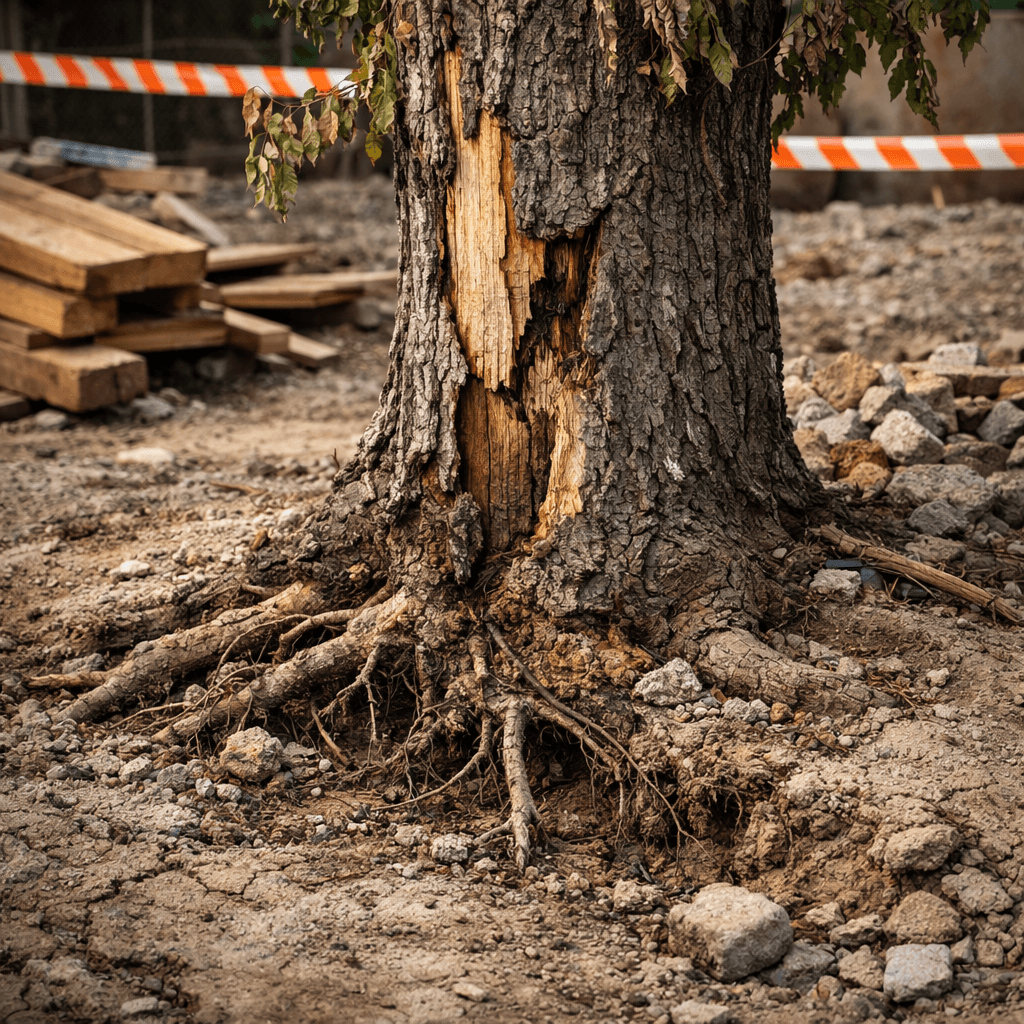
Installation details matter. We avoid drilling near existing cracks, size hardware to species and leader diameter, and place cables two thirds of the distance from the union to the leader tips. Bracing rods can arrest crack propagation in a split crotch, but only when installed with care and paired with pruning to reduce lever arms. A follow up inspection every one to three years keeps surprises at bay.
Stump Removal & Grinding after the rush
Stumps look passive, but after storm removals they are often the last hazard. A jagged stump can trip, and the root plate of a blow over can settle unpredictably as soil dries. Stump Removal & Grinding usually follows within a week or two of the emergency work. A grinder takes stumps down six to twelve inches below grade. For replanting or hardscape installation, we can chase lateral roots and go deeper in a focused trench. The mulch produced can be left on site as a berm or hauled away. If the tree was removed due to a pathogen like Armillaria, we dispose of grindings rather than spreading spores.
Some clients prefer full stump extraction, especially for small to medium stumps in garden beds. That requires an excavator and careful utility locates. Which brings up a point: emergency calls sometimes proceed before utility marking due to immediate danger. Stump grinding never should. We book locates first, then cut.
FireSmart Tree Services and wind seasons
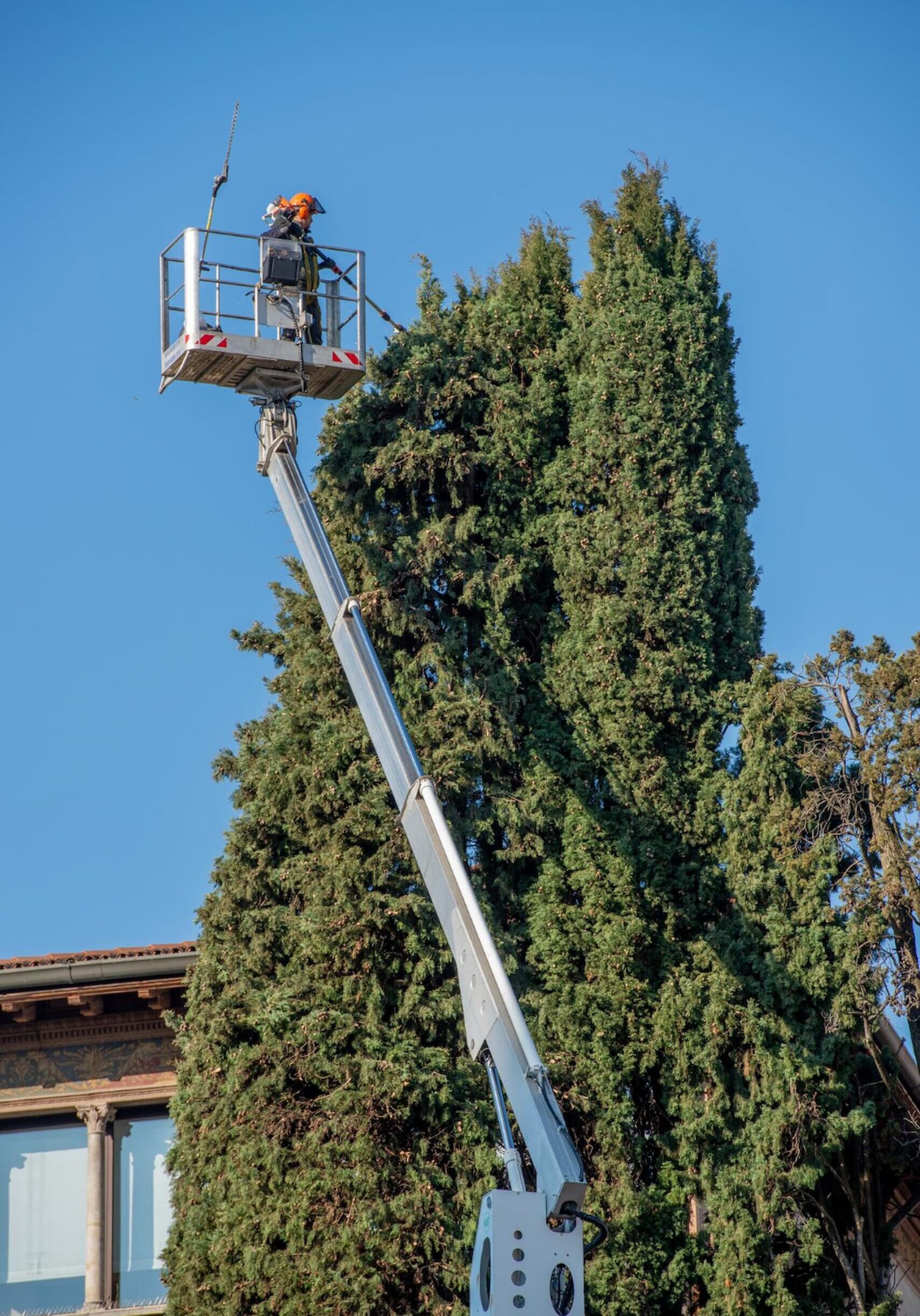
Wind and fire may seem opposite threats, yet the prep has overlap. FireSmart Tree Services increase your defensible space and cut ladder fuels that also act as wind sails. Clearing flammable debris in the first five meters around the home, spacing shrubs so crowns do not touch, and removing deadwood from lower crowns all help both fire and wind resilience. In wildfire country, we often prioritize removing flammable species close to structures, then prune remaining trees to break up continuity between ground fuels and canopy. The work pays dividends in storms by reducing the mass at the periphery of crowns, where breakage often starts.
Insurance, permits, and paperwork you actually need
Storm damage sits in a different category with most municipalities. Many have emergency waivers that allow immediate removal of a hazardous tree without the usual permit, provided you document the condition and submit after the fact. A Certified Arborist Consultation with photos and a brief report meets that need. For heritage or protected trees, call the city first if time allows. In true emergencies, life safety overrides red tape, but we keep records.
Insurance claims go faster with clear scope and cost breakdowns. Write down the date and time of the event, take photos before and after, save receipts for temporary repairs, and get a detailed invoice that separates Emergency Tree Services from standard debris cleanup. Most home policies cover tree removal when the tree damages a covered structure or blocks a driveway. Removal to protect undamaged property is more variable. Expect deductibles to apply. Ask your provider if they reimburse reasonable costs for tarping and temporary shoring. Document any discussions with adjusters in email.
Costs vary with complexity, access, wood size, and equipment. A simple limb removal off a fence might run a few hundred dollars. A full night removal of a large tree off a roof with crane support can reach several thousand. Transparency matters. A reputable company explains why a crane is needed, what alternatives exist, and how each choice affects risk to your home.
Working around utilities and structures
Trees and power lines do not mix, and storms prove it. Even service drops to a house carry enough energy to be lethal. Only the utility can declare a line de energized. Assume all lines are live until that confirmation. We also coordinate with roofers when a tree has breached the building envelope. Tree crews can often lift weight off a roof, but they should not attempt structural repairs beyond temporary shoring and tarping. If the tree shifted rafters or wall plates, a contractor must evaluate before interior cleanup.
Ground hazards are easy to miss. Sprinkler lines, gas meters, septic lids, and garden lighting can all hide under debris. We ask homeowners to point out known utilities. If we suspect a gas leak, we evacuate and call it in. Chains in a chipper and rocks under a log both make expensive noises. A five minute walk with the client can prevent a lot of grief.
How Certified Arborist Consultation guides decisions
Storm work lives at the junction of biology and physics. A certified arborist brings both to the table. During a consultation, we document species, age class, site conditions, and pre existing defects, then evaluate storm impacts. We explain options in plain terms. Can the tree be stabilized with Tree Cable and Bracing and strategic pruning, or do we remove now and replant in fall. What does the next five years look like for wound closure and decay progression. How will pruning intervals change. In some cases, we stage work, reducing the crown now and reevaluating in one growth season.
Clients appreciate practical plans. If a line of poplars has shed three tops in one storm, we can move from reactive to preventive. That might mean a phased removal and replanting plan to introduce diverse, wind firm species, rather than waiting for each to fail on its own schedule.
Preventive pruning and structural training before it blows
Trees grown in open yards tend to build wide crowns and heavy laterals. Left alone, those laterals produce long lever arms. Structural pruning in youth trains a central leader, reduces or removes co dominant stems, and balances scaffold distribution. https://caidenbsse862.almoheet-travel.com/fast-and-clean-stump-removal-grinding-solutions By the time a tree reaches ten to fifteen years, a few well timed cuts every three to five years set it up for better wind performance for decades.
For mature trees, reduction pruning at the outer canopy reduces wind loading without gutting the interior. We target weak attachments, thinning only enough to let wind pass through. Done well, you hardly notice a change from the ground. Done poorly, it looks like a lion tail, with foliage puffballs at branch ends and stripped interiors that invite breakage. Choose crews that talk about cut types and targets, not just how much they will take off.
Wood disposal, milling, and replanting
After a storm, debris piles fast. Most companies chip brush and haul away, leaving logs stacked for later pickup or for the homeowner’s firewood. If a valuable species goes down cleanly, consider milling. Urban lumber is not a myth. We have turned a fallen walnut into dining tables and a wind thrown cedar into siding. Milling needs clear communication upfront, since log lengths, metal detection, and access paths all affect the plan.
Replanting closes the loop. Species choice should match site sun, soil, wind exposure, and long term size. In windy corridors, look at species with strong wood and good branch architecture, like bur oak, ginkgo, or sweetgum cultivars with strong central leaders. Planting distance from structures is often underestimated. Give large trees five to ten meters of setback. Ground prep matters more than hole size. Loosen a broad area, not a deep one, and avoid burying the root flare. A light layer of mulch, not volcano mounds, keeps moisture even and mower blades away.
Safety from the crew you hire
A professional tree service treats storm work with respect. Ask about qualifications. Are there ISA Certified Arborists on staff. Do they carry current liability and workers compensation insurance. Do they have documented training for aerial rescue and electrical hazard awareness. Look for real PPE on every worker: helmets with eye and ear protection, chainsaw chaps or pants, high visibility clothing, and appropriate footwear. You should see rigging gear rated for loads, not hardware store rope. Trucks and chippers should be well maintained, with wheel chocks set on slopes and cones placed for traffic control.
Night work raises the bar. Adequate lighting, rested crews, and a lead who is willing to pause when conditions change are non negotiable. Speed matters in emergencies, but haste gets people hurt. The best crews move quickly and quietly, with deliberate steps and few shouted words, because the plan is clear.
Five warning signs your tree may be unsafe after a storm
This quick reference helps you decide when to call right away:
- A new, noticeable lean, especially if soil around the base has lifted or cracked.
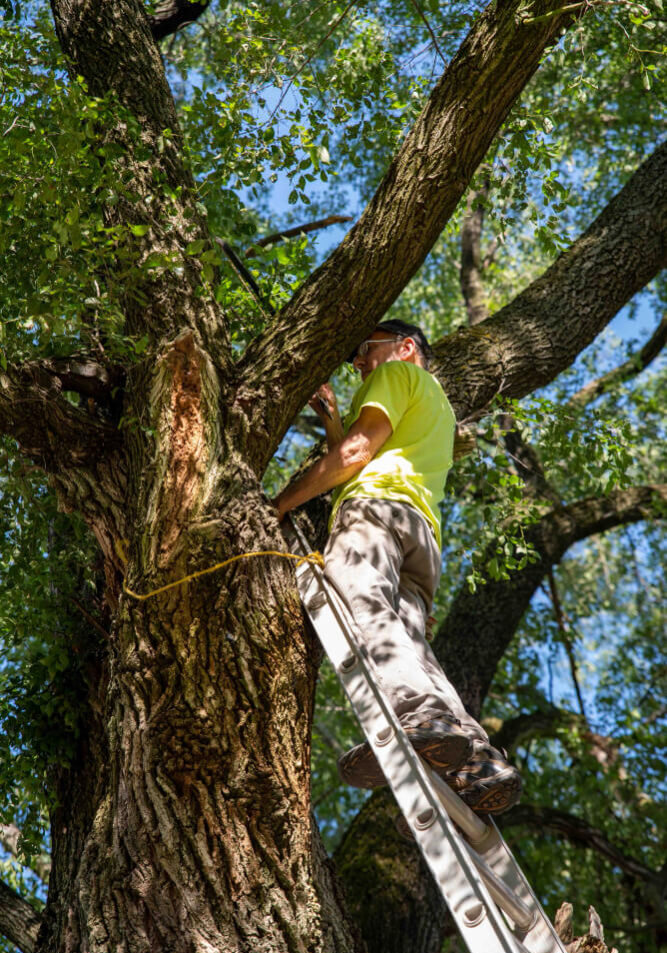
- Long vertical or spiral cracks in the trunk, with sap or fresh wood exposed.
- Hanging or partially attached branches over driveways, walks, or roofs.
- Heaving root plate with gaps between trunk and soil, or visible severed roots.
- Bark bulges or splits around major branch unions, indicating internal failure.
If you see one or more of these, keep clear and call for an assessment. Even if the tree looks still, internal fibers can fail hours after the wind stops.
How the day wraps after the night call
The best feeling on a storm shift comes when the site is safe and the homeowner can breathe again. The driveway is open, the roof is lightened and tarped, and the splintered limbs are no longer hanging above a bedroom. We sweep, collect nails and fasteners with a magnet where roofing repairs started, and leave a clear plan for the next steps. That might include a return visit for Stump Removal & Grinding, a Monday morning Certified Arborist Consultation for long term care, or a quote for Tree Cable and Bracing to protect a valuable specimen.
Most importantly, we talk about what the storm taught us about that property’s trees. Which ones rode it out easily and why, which ones need structural attention, and where FireSmart Tree Services can double as wind hardening. The work is not only about chainsaws and cranes. It is about stewarding living structures so they coexist with weather that is not always friendly.
The value of choosing a partner, not just a vendor
Storm damage turns tree care from a discretionary service into an urgent need. In that moment, you want a team that can do more than remove a problem. You want a partner who can assess risk, preserve what is worth saving, and plan for resilience. That includes full spectrum Tree Removal Services when a tree is truly beyond help, precise Tree Pruning & Crown Shaping to rehabilitate survivors, secure Tree Cable and Bracing where it makes sense, and timely Stump Removal & Grinding to finish the job cleanly. It also includes proactive FireSmart Tree Services for properties that face both wind and wildfire seasons.
Find a company that answers the phone at odd hours, shows up with the right gear, and speaks plainly about trade offs. The storms will keep coming. With thoughtful care and skilled Emergency Tree Services, the damage does not have to define your landscape.
Ace Tree Services Ltd.
Name: Ace Tree Services Ltd.Address: 4656 Wallace Hill Road, Kelowna, BC
Postal code: V1W 4C2
Phone: 250-212-9593
Website: https://acetree.ca/
Hours:
Monday: 7:00 AM - 5:00 PM
Tuesday: 7:00 AM - 5:00 PM
Wednesday: 7:00 AM - 5:00 PM
Thursday: 7:00 AM - 5:00 PM
Friday: 7:00 AM - 5:00 PM
Saturday: 7:00 AM - 5:00 PM
Sunday: Closed
Open-location code (plus code): RHF8+8G Kelowna, British Columbia, Canada
Map/listing URL: https://www.google.com/maps/place/Ace+Tree+Services+Ltd./@49.8232606,-119.4337283,659m/data=!3m2!1e3!4b1!4m6!3m5!1s0x537d8b1d074815c5:0x450b88afa7a41435!8m2!3d49.8232606!4d-119.4337283!16s%2Fg%2F11ydkpnh22
Embed iframe:
"@context": "https://schema.org", "@type": "HomeAndConstructionBusiness", "name": "Ace Tree Services Ltd.", "url": "https://acetree.ca/", "telephone": "250-212-9593", "address": "@type": "PostalAddress", "streetAddress": "4656 Wallace Hill Road", "addressLocality": "Kelowna", "addressRegion": "BC", "addressCountry": "CA" , "openingHoursSpecification": [ "@type": "OpeningHoursSpecification", "dayOfWeek": "https://schema.org/Monday", "opens": "07:00", "closes": "17:00" , "@type": "OpeningHoursSpecification", "dayOfWeek": "https://schema.org/Tuesday", "opens": "07:00", "closes": "17:00" , "@type": "OpeningHoursSpecification", "dayOfWeek": "https://schema.org/Wednesday", "opens": "07:00", "closes": "17:00" , "@type": "OpeningHoursSpecification", "dayOfWeek": "https://schema.org/Thursday", "opens": "07:00", "closes": "17:00" , "@type": "OpeningHoursSpecification", "dayOfWeek": "https://schema.org/Friday", "opens": "07:00", "closes": "17:00" ], "geo": "@type": "GeoCoordinates", "latitude": 49.8232606, "longitude": -119.4337283 , "hasMap": "https://www.google.com/maps/place/Ace+Tree+Services+Ltd./@49.8232606,-119.4337283,659m/data=!3m2!1e3!4b1!4m6!3m5!1s0x537d8b1d074815c5:0x450b88afa7a41435!8m2!3d49.8232606!4d-119.4337283!16s%2Fg%2F11ydkpnh22"
Ace Tree Services Ltd. provides professional tree removal, pruning, stump grinding, emergency response, and arborist consultations for properties in Kelowna and across the Okanagan Valley.
The company works with homes, commercial properties, and municipal settings where tree work needs to be planned carefully around buildings, fences, driveways, landscaping, and other site constraints.
Based in Kelowna, the team is positioned to help nearby neighbourhoods and surrounding Okanagan communities with routine tree care and time-sensitive storm cleanup.
Customers looking for careful tree work often want a crew with certified arborist training, insurance, and a methodical approach to higher-risk removals.
Services also include dangerous tree assessment, cabling and bracing, and wildfire risk reduction tree work for properties that need longer-term planning.
To request a quote or discuss tree care options, call 250-212-9593 or visit https://acetree.ca/.
A public map listing is available to help customers confirm the business location and get directions before a site visit or estimate.
For Kelowna property owners who need pruning, removals, or emergency tree help, a local tree service can make it easier to schedule site-specific recommendations and cleanup.
Popular Questions About Ace Tree Services Ltd.
What services does Ace Tree Services Ltd. provide?Ace Tree Services Ltd. lists tree removal, stump removal and grinding, tree pruning and crown shaping, emergency tree service, arborist consultation, dangerous tree assessment and removal, cabling and bracing, and wildfire risk reduction tree work.
Who does Ace Tree Services Ltd. serve?
The company describes its work as serving homes, businesses, and municipalities in Kelowna and across the Okanagan Valley.
Is emergency tree help available?
Yes. Emergency service is listed for downed or uprooted trees, dangerous tree assessment, stabilization work, and branch cleanup. If a tree is near power lines, the safest first step is to stay clear and contact the utility provider before any tree work begins.
Do I always need a permit to remove a tree?
Not always. Permit requirements can depend on where the tree is located and whether it is near a creek, lake, steep slope, or another protected area. It is best to check local rules for the specific property before removal work starts.
How deep does stump grinding usually go?
Standard stump grinding is typically described as going about 6 to 12 inches below ground level, which is often enough for grass or surface landscaping. Deeper grinding may be possible when site plans call for it.
How much of a tree can be safely removed at one time?
That depends on the species, age, health, and structure of the tree. In practice, good pruning is usually about removing the right limbs for health, clearance, and structure rather than chasing a fixed percentage.
What are common signs that a tree may be dangerous?
Large dead limbs, visible cracks, a new lean, root damage, canopy dieback, or storm-related damage can all be warning signs. Trees near structures deserve extra attention when any of those issues appear.
What is cabling and bracing in tree care?
Cabling and bracing are support systems used to reduce the risk of failure in trees with structural weaknesses that may still be worth preserving. They are generally used to add support, not to replace good assessment and ongoing maintenance.
How do I contact Ace Tree Services Ltd.?
Call 250-212-9593.Website: https://acetree.ca/.
Landmarks Near Kelowna, BC
Downtown KelownaThe downtown core is a practical reference point for lakefront neighbourhoods, mixed-use streets, and central residential properties. If your property is near downtown, tree pruning, removals, and cleanup can be planned around tighter access and nearby structures.
Knox Mountain Park
This well-known park north of downtown is a recognizable landmark for nearby homes and hillside properties. If you are close to this area, ask about tree assessment, trimming, or removal work suited to sloped sites.
Mission Creek Greenway
The greenway runs through several parts of Kelowna and is a useful landmark for nearby residential areas. If your property borders or sits near this corridor, site-specific tree planning is especially important.
Pandosy Village
Pandosy is one of Kelowna’s most recognizable neighbourhoods and a common reference point for south-central properties. If you are nearby, request help for pruning, removals, or storm cleanup around homes and small commercial sites.
Rutland
Rutland is a major east Kelowna neighbourhood with a mix of residential and local commercial properties. If you are located in or near Rutland, tree work can be scheduled for both routine maintenance and urgent situations.
Landmark District
This central business-focused area is a practical landmark for offices, service properties, and nearby residential streets. If your site is near the district, ask about careful tree work around parking, access lanes, and built-up lots.
Kelowna’s North End
The North End sits on the edge of downtown and is a useful reference for nearby homes, industrial sites, and commercial properties. If you are in this part of the city, request tree care based on the layout and constraints of the lot.
Airport District
The Airport District is a recognizable north Kelowna reference point for surrounding properties and access routes. If you are in this area, ask about tree services for residential acreage, commercial sites, or roadside cleanup needs.
Glenmore & Dilworth
These established Kelowna neighbourhoods are useful landmarks for central and north-central service calls. If your property is nearby, pruning and removal work can be tailored to mature trees and established landscapes.
Highway 97 Corridor
Highway 97 is one of the city’s main travel routes and a common way to describe location within Kelowna. If your home or property is just off the corridor, a clear landmark reference can help speed up quote scheduling and site planning.