Certified Arborist Consultation for Tree Preservation Plans
Trees do not come with a reset button. Once a mature canopy is gone, it can take a generation to recover shade, habitat, and the quiet that leafy streets provide. This is why smart projects, from a backyard addition to a multi‑lot subdivision, start with a Certified Arborist Consultation focused on a proper Tree Preservation Plan. It is not just about saving a trunk or two. It is good risk management, smoother permitting, healthier trees, and fewer surprises once equipment rolls on site.
What a preservation‑minded consultation really looks like
A solid consultation starts before any saw, skid steer, or trenching machine touches the site. An ISA Certified Arborist walks the property, maps the canopy, and ties specific trees to specific project details. Healthy trees that look fine at first glance can hide defects, shallow root plates, declining vigor, or soil constraints that only show up with trained inspection. On a renovation in my first decade of practice, a sugar maple with full summer foliage had advanced girdling roots. The contractor planned to stage pallets at its base. Had we not caught the root issue, extra soil and compaction would have pushed that tree into irreversible decline within a season.
Arborists do not just label trees keep or remove. They explain what can be done to maintain safety and structure, how construction will impact root zones, and which trees are good candidates for retention. The output is practical: protection fencing locations, no‑dig zones, pruning or cabling needs, monitoring schedules, and a fallback plan if a tree deteriorates under stress.
Why preservation pays off
There is a hard business case behind tree preservation. Shade alone can reduce cooling loads by 10 to 30 percent on homes with strategic canopy cover. Street trees raise perceived property value. Mature trees stabilize soil, temper wind, and pull stormwater into the ground. In wildfire‑prone regions, well‑managed trees are a critical piece of defensible space planning. Municipal authorities know this, so they often require a Tree Preservation Plan with a sign‑off by a qualified professional as part of development permits.
I often see budgets shift once the team understands replanting timelines. A 20‑inch diameter oak stores decades of growth. Even aggressive replanting cannot replace that function quickly. Investing a few thousand dollars in protective fencing, pre‑construction aeration, and structural pruning can save six figures in long‑term landscape costs across a large project.
The core deliverables you should expect from a Certified Arborist
- An inventory with species, diameter at breast height, condition rating, and preservation value tied to a scaled site plan
- A root protection zone map with specific fencing, signage, and access routes that keep equipment where it belongs
- Recommendations for Tree Pruning & Crown Shaping to balance structure before wind and construction stress arrive
- A risk profile that separates routine maintenance trees from candidates for Tree Cable and Bracing or, when warranted, Dangerous Tree Assessment and Removal
- A monitoring and reporting schedule aligned with permit requirements and construction milestones
These five items form the backbone of a Tree Preservation Plan that contractors can actually follow. They also allow city reviewers to check compliance without guesswork.
Anatomy of a site assessment
A site assessment combines visual inspection with simple measurements and, when needed, diagnostic tools. Here is what is happening behind the clipboard.
Species and structure. Some trees handle disturbance better than others. Honey locust and London plane shrug off urban conditions. Hemlock and beech can sulk for years after root loss. Codominant stems with included bark call for pruning or cabling before storms test them. We measure diameter at breast height, note previous pruning, and look for decay cavities, fungal conks, and callus patterns around old wounds.
Soils and roots. Construction damage almost always shows up below grade. Roots extend two to three times the radius of the canopy on many species, with most fine feeder roots in the top 12 to 18 inches. Soil tests for compaction and texture tell us how quickly a site will dry after rain and how fragile the root network is under equipment pressure. If trenching is unavoidable, planned hand digging or air spading can expose roots cleanly so they can be cut once rather than torn repeatedly.
Hydrology and grading. Changes in water flow can doom otherwise healthy trees. Fill over roots suffocates them, even four inches of new soil can reduce oxygen exchange. Lowering grade can shear off buttress roots near the trunk. I once watched a developer keep a pair of mature elms by shifting a planned swale five feet and installing a perforated pipe to carry water past the critical root zone. That small adjustment saved both trees and eliminated a recurring puddle that would have haunted new buyers.
Construction logistics. Arborists translate project sequences into tree risk. Where will materials be stored, cranes set up, or concrete washed out. The best plan is garbage if the crew cannot move around it. Good consultations bring foremen into the conversation early and make the protected areas easy to honor.
How preservation intersects with municipal rules
Most cities and counties in North America now require a Tree Preservation Plan during site plan review when a project impacts canopy over a stated size. The thresholds vary, typically 6 to 12 inches in trunk diameter or a combined canopy cover percentage. Plans must be stamped by a qualified professional such as an ISA Certified Arborist or a Registered Consulting Arborist. Expect conditions like bond requirements, pre‑construction meetings, and penalties for damage to protected trees.
Permits often require photographic documentation at each phase. Smart contractors assign a point person to walk the tree protection areas with the arborist and city inspector. When a problem crops up, like a subcontractor clipping a fence to make room for scaffolding, quick communication prevents compounding damage and fines.
Stepwise process for building a Tree Preservation Plan that works
- Inventory and mapping tied to the survey, not a napkin sketch
- Risk assessment that flags removal candidates early so crews do not work around doomed trees
- Protection design, including fence layout, access points, and ground protection for short‑term crossings
- Pre‑construction tree care such as structural pruning, mulch application, and vertical mulching or radial trenching where compaction is severe
- Monitoring with defined triggers for adjustments, such as drought response watering or adding guying when wind exposure changes
Each step is more about coordination than complexity. The plan’s real value is how it keeps people and machines from improvising near roots.
Pruning, shaping, and structural stability
Before construction begins, Tree Pruning & Crown Shaping can reduce the odds of branch failure when wind patterns shift after adjacent trees come down or buildings change airflow. Pruning should target dead or rubbing branches first, then reduce lever arms on long, end‑heavy limbs. Proper cuts outside the branch collar matter more than fancy gear. On a 60‑foot maple recently crowned on a mixed‑use infill site, a 12 percent reduction in sail area dropped risk to acceptable levels without creating lion‑tailed branches or stubs that invite decay.
Some trees show structural weaknesses that do not warrant removal but should not be ignored. Tree Cable and Bracing can redistribute load across codominant stems or weak unions. Done right, cabling is discreet and buys time for the tree to add adaptive growth. Done poorly, it is decoration that fails under load. The consultation should specify cable rating, placement relative to branch unions, and inspection intervals. It should also be honest about limits. A cracked union with active separation is a removal candidate, not a bracing showpiece.
When removal is the responsible choice
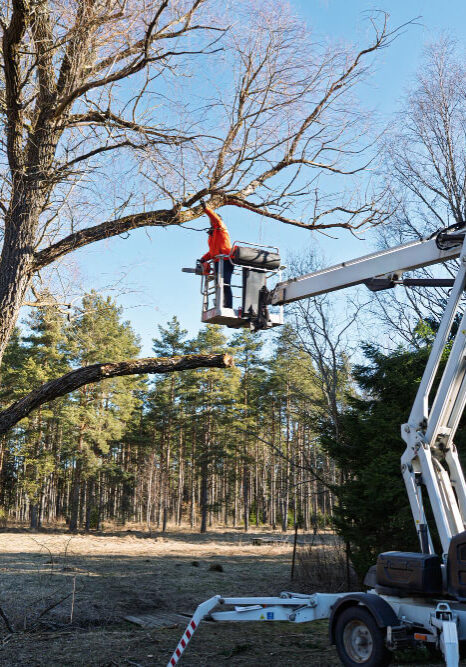
Not every tree should be saved. Trees with advanced decay at the base, severe lean with compromised root systems, or persistent dieback beyond 50 percent crown loss often become hazards when site disturbance increases. A Dangerous Tree Assessment and Removal recommendation should be based on visible defects, decay detection tools where helpful, and site targets. The plan should propose timing that reduces risk to crews and the public. Removing a hazard before excavation avoids working under stressed trees with heavy equipment.
If removal is required, plan for what follows. Stump Removal & Grinding clears surface roots and makes replanting practical, but heavy grinding in a root zone you aim to preserve can be counterproductive. For adjacent retained trees, leave stumps outside root protection zones until major construction ends to avoid vibration and unnecessary root severance. Then, when space is safe and stable, complete the grinding and soil amendments.
Tree Removal Services often get framed as a last resort, yet clean removals can protect the health of nearby trees by preventing disease spread, opening the canopy to redistribute light, and reducing wind leverage on the group. The key is to approach removals within the same preservation mindset: protect the keepers while you take out the problem.
Dealing with emergencies without wrecking the plan
Storms do not wait for permit cycles. Emergency Tree Services should be built into your preservation document. When a limb tears out during construction or a wind event exposes a root plate, speed matters, but so does restraint. I advise general contractors to call the consulting arborist first, then the city, then mobilize. A same‑day site visit can prevent a reactive crew from driving into protected zones or compacting wet soils while chasing a dangling limb.
Good emergency language gives crews clear guardrails. If a branch threatens a hazard zone, prune to the first large lateral within reach, from a mat or crane pad previously identified. If a tree uproots, cut the trunk into sections from the safest side rather than trying to push the root ball back down. Document with date‑stamped photos, then update the plan to reflect the new canopy reality.
FireSmart thinking belongs in urban plans too
FireSmart Tree Services are not just for rural properties. In regions with seasonal wildfire risk, a preservation plan should balance canopy value with defensible space. That means ladder fuel reduction, spacing guidelines that vary by slope and exposure, and species selection for replacement trees that retain moisture and drop fewer fine fuels. I have worked on neighborhoods where a ten‑foot noncombustible zone around structures, combined with careful limbing of conifers up to the first third of the crown, made the difference between smoldered mulch and ignited eaves during ember showers.
Preservation does not mean packing trees tightly against siding. It means smarter placement, seasonal maintenance, and honest conversations with homeowners about what a safe, shaded yard looks like when summers turn hot and dry.
Soil protection, the quiet success factor
Most tree fatalities after construction trace back to compaction and grade changes. You will not see the worst damage that first year. Leaves may still look fine while roots suffocate. Prevention is affordable. Temporary wood mats or geogrid panels spread load on routes that must cross root zones. Six inches of coarse mulch outside active work areas buffers temperature swings and reduces moisture loss. Avoid piling soil or spoils against trunks. Target irrigation during drought, not daily soaking that invites root rot.
I prefer air tool methods for decompaction within a critical root zone. Vertical mulching creates columns for gas exchange and gentle root exploration. Radial trenching, when laid like spokes, loosens hardpan without cutting a continuous trench near the trunk. Pair these methods with compost‑amended topdressing, and you will see quicker rebound in canopy density over two to three seasons.
Communicating the plan to people who build
A plan that lives only on paper is a plan ignored. During pre‑construction meetings, I walk the site with superintendents and the excavation lead. We set stakes where fences will go and agree on storage areas that will not shift under schedule pressure. Simple signage helps. I have seen a four‑word sign, Root Zone, No Entry, do more good than a three‑page memo.
A weekly quick check keeps small violations small. If someone cuts zip ties and nudges a fence six feet for an afternoon, repair it that same day and address the cause. Do not wait for the next inspection. Construction is a moving target. Arborists who remain present win more tree saves than those who appear only at milestones.
Costs, timelines, and how to budget intelligently
Expect a Certified Arborist Consultation with a formal Tree Preservation Plan to run from a few hundred dollars for a small residential site up to several thousand for multi‑acre developments, depending on tree counts, mapping needs, and municipal submittals. Protection materials and pre‑work such as pruning or soil care often represent the larger spend. On typical infill lots with three to five keeper trees, I see total preservation budgets between 2 and 5 percent of landscape costs. That number climbs if cabling, large crane pruning, or specialized ground protection is required.
Schedule the consultation as early as the survey and conceptual design stages. Waiting until permits are nearly due forces compromises. Early input lets designers shift a driveway to avoid a root flare or push a foundation pierline just far enough to preserve stability. Most cities review plans in two to four weeks. Build that into your schedule to avoid idle time on site.
How homeowners can prepare before the arborist arrives
Homeowners can accelerate value from the first meeting by gathering a few pieces of information. Site surveys or plot plans help. Share your goals, the parts of the yard you use most, and any past problems such as summer scorch or fungal leaf spots. Note where utilities run. Mark irrigation valves and lines when possible to prevent accidental cuts during soil work. If your project includes hardscape or grade changes, bring the designer to the walk‑through so everyone hears the same constraints and opportunities.
Replanting with foresight
Even the best preservation plan often includes some removals. Treat replanting as part of the same strategy. Right tree, right place is not a slogan. It is math and maintenance. Choose species suited to your microclimate and soils. Consider mature size against structures, sightlines, and neighbors. Mix ages and types so your canopy does not age out all at once. Planting a three‑inch caliper tree may seem appealing, but in many cases a one‑and‑a‑half to two‑inch tree establishes faster and overtakes the larger stock within a few seasons.
Plan irrigation for establishment, then taper. Mulch two to three inches deep, kept back from the trunk. Resist the urge to stake unless wind exposure or crown‑to‑root imbalance demands it, and remove stakes within the first season.
Case notes from the field
A historic church retrofit, downtown block. Six plane trees lined a tight sidewalk. The engineer proposed utility upgrades right through the root paths. We mapped each tree’s root plate with ground penetrating radar and adjusted trench paths by as little as 18 inches in places. Crews installed plywood and geogrid for a three‑week window over which a mini excavator crossed twice daily. We pruned for clearance, reduced one codominant limb with poor attachment, and installed a single dynamic cable to hedge against storm load while the street canyon changed. Five years later, all six trees remain, with canopy density within 5 percent of baseline.
Suburban addition, clay soils. A homeowner wanted to preserve a 24‑inch red oak within 12 feet of a planned foundation. The soil compacted to the texture of brick during dry spells. We set a root protection radius based on trunk diameter and built a micro pile foundation that avoided continuous footings near the tree. Air spade work loosened soil, then we added compost and mulch. The crew used a concrete pump to skip driving the mixer within the protected zone. The oak dropped some interior leaves during the first hot summer, then rebounded the next year. Without the plan, this tree would have failed slowly, with decline showing three to five years later.
Wildland urban interface remodel. A sloped lot held a cluster of junipers and a single ponderosa pine near the deck. The owner https://rentry.co/ex59ei35 wanted shade but feared embers. We used FireSmart Tree Services principles to limb lower branches, thin fine fuels under the canopy, and replace a continuous hedge with spaced, irrigated broadleaf shrubs. We removed one juniper tight to the eaves using careful rigging, then completed Stump Removal & Grinding after the dry season. Shade remained, but we broke up fuel ladders and maintained clearance the fire marshal applauded during inspection.
Where services connect inside a preservation mindset
Preservation is not at odds with services like Tree Removal Services or Emergency Tree Services. Those services, delivered with context, protect the overall canopy and the people who live under it. A preservation‑first arborist will prune sooner to build strong structure, brace a weak union when it buys time, and remove when the risk profile makes it the responsible move. The same practice will specify careful stump grinding to avoid collateral damage, and will respond fast when weather or accidents force quick decisions.
When you read a proposal, look for that alignment. Does the provider offer Certified Arborist Consultation as a defined service, not a courtesy walkthrough. Do their Dangerous Tree Assessment and Removal recommendations cite specific defects and targets. Are Tree Cable and Bracing specs tied to standards and inspection schedules. Do they integrate FireSmart thinking if you live near wildlands. Those clues tell you your trees will be managed as assets, not just line items.
Final thoughts from years on the ground
Good Tree Preservation Plans feel boring once construction starts. Fences stand where they should. Crews work around them because it is obvious, and because the superintendent bought in early. Trees you keep may show a tough season, then push healthy shoots the next. The neighbors cannot quite say why the street feels better, but it does. That quiet success is the whole point.
Bring a Certified Arborist into the conversation when your project is still a sketch. Ask for specifics, not platitudes. Be open to a few trade‑offs, such as a driveway tweak to spare a root flare. You will spend less time fighting nature and more time benefiting from it, under shade that outlives your project and probably you.
Ace Tree Services Ltd.
Name: Ace Tree Services Ltd.Address: 4656 Wallace Hill Road, Kelowna, BC
Postal code: V1W 4C2
Phone: 250-212-9593
Website: https://acetree.ca/
Hours:
Monday: 7:00 AM - 5:00 PM
Tuesday: 7:00 AM - 5:00 PM
Wednesday: 7:00 AM - 5:00 PM
Thursday: 7:00 AM - 5:00 PM
Friday: 7:00 AM - 5:00 PM
Saturday: 7:00 AM - 5:00 PM
Sunday: Closed
Open-location code (plus code): RHF8+8G Kelowna, British Columbia, Canada
Map/listing URL: https://www.google.com/maps/place/Ace+Tree+Services+Ltd./@49.8232606,-119.4337283,659m/data=!3m2!1e3!4b1!4m6!3m5!1s0x537d8b1d074815c5:0x450b88afa7a41435!8m2!3d49.8232606!4d-119.4337283!16s%2Fg%2F11ydkpnh22
Embed iframe:
"@context": "https://schema.org", "@type": "HomeAndConstructionBusiness", "name": "Ace Tree Services Ltd.", "url": "https://acetree.ca/", "telephone": "250-212-9593", "address": "@type": "PostalAddress", "streetAddress": "4656 Wallace Hill Road", "addressLocality": "Kelowna", "addressRegion": "BC", "addressCountry": "CA" , "openingHoursSpecification": [ "@type": "OpeningHoursSpecification", "dayOfWeek": "https://schema.org/Monday", "opens": "07:00", "closes": "17:00" , "@type": "OpeningHoursSpecification", "dayOfWeek": "https://schema.org/Tuesday", "opens": "07:00", "closes": "17:00" , "@type": "OpeningHoursSpecification", "dayOfWeek": "https://schema.org/Wednesday", "opens": "07:00", "closes": "17:00" , "@type": "OpeningHoursSpecification", "dayOfWeek": "https://schema.org/Thursday", "opens": "07:00", "closes": "17:00" , "@type": "OpeningHoursSpecification", "dayOfWeek": "https://schema.org/Friday", "opens": "07:00", "closes": "17:00" ], "geo": "@type": "GeoCoordinates", "latitude": 49.8232606, "longitude": -119.4337283 , "hasMap": "https://www.google.com/maps/place/Ace+Tree+Services+Ltd./@49.8232606,-119.4337283,659m/data=!3m2!1e3!4b1!4m6!3m5!1s0x537d8b1d074815c5:0x450b88afa7a41435!8m2!3d49.8232606!4d-119.4337283!16s%2Fg%2F11ydkpnh22"
Ace Tree Services Ltd. provides professional tree removal, pruning, stump grinding, emergency response, and arborist consultations for properties in Kelowna and across the Okanagan Valley.
The company works with homes, commercial properties, and municipal settings where tree work needs to be planned carefully around buildings, fences, driveways, landscaping, and other site constraints.
Based in Kelowna, the team is positioned to help nearby neighbourhoods and surrounding Okanagan communities with routine tree care and time-sensitive storm cleanup.
Customers looking for careful tree work often want a crew with certified arborist training, insurance, and a methodical approach to higher-risk removals.
Services also include dangerous tree assessment, cabling and bracing, and wildfire risk reduction tree work for properties that need longer-term planning.
To request a quote or discuss tree care options, call 250-212-9593 or visit https://acetree.ca/.
A public map listing is available to help customers confirm the business location and get directions before a site visit or estimate.
For Kelowna property owners who need pruning, removals, or emergency tree help, a local tree service can make it easier to schedule site-specific recommendations and cleanup.
Popular Questions About Ace Tree Services Ltd.
What services does Ace Tree Services Ltd. provide?Ace Tree Services Ltd. lists tree removal, stump removal and grinding, tree pruning and crown shaping, emergency tree service, arborist consultation, dangerous tree assessment and removal, cabling and bracing, and wildfire risk reduction tree work.
Who does Ace Tree Services Ltd. serve?
The company describes its work as serving homes, businesses, and municipalities in Kelowna and across the Okanagan Valley.
Is emergency tree help available?
Yes. Emergency service is listed for downed or uprooted trees, dangerous tree assessment, stabilization work, and branch cleanup. If a tree is near power lines, the safest first step is to stay clear and contact the utility provider before any tree work begins.
Do I always need a permit to remove a tree?
Not always. Permit requirements can depend on where the tree is located and whether it is near a creek, lake, steep slope, or another protected area. It is best to check local rules for the specific property before removal work starts.
How deep does stump grinding usually go?
Standard stump grinding is typically described as going about 6 to 12 inches below ground level, which is often enough for grass or surface landscaping. Deeper grinding may be possible when site plans call for it.
How much of a tree can be safely removed at one time?
That depends on the species, age, health, and structure of the tree. In practice, good pruning is usually about removing the right limbs for health, clearance, and structure rather than chasing a fixed percentage.
What are common signs that a tree may be dangerous?
Large dead limbs, visible cracks, a new lean, root damage, canopy dieback, or storm-related damage can all be warning signs. Trees near structures deserve extra attention when any of those issues appear.
What is cabling and bracing in tree care?
Cabling and bracing are support systems used to reduce the risk of failure in trees with structural weaknesses that may still be worth preserving. They are generally used to add support, not to replace good assessment and ongoing maintenance.
How do I contact Ace Tree Services Ltd.?
Call 250-212-9593.Website: https://acetree.ca/.
Landmarks Near Kelowna, BC
Downtown KelownaThe downtown core is a practical reference point for lakefront neighbourhoods, mixed-use streets, and central residential properties. If your property is near downtown, tree pruning, removals, and cleanup can be planned around tighter access and nearby structures.
Knox Mountain Park
This well-known park north of downtown is a recognizable landmark for nearby homes and hillside properties. If you are close to this area, ask about tree assessment, trimming, or removal work suited to sloped sites.
Mission Creek Greenway
The greenway runs through several parts of Kelowna and is a useful landmark for nearby residential areas. If your property borders or sits near this corridor, site-specific tree planning is especially important.
Pandosy Village
Pandosy is one of Kelowna’s most recognizable neighbourhoods and a common reference point for south-central properties. If you are nearby, request help for pruning, removals, or storm cleanup around homes and small commercial sites.
Rutland
Rutland is a major east Kelowna neighbourhood with a mix of residential and local commercial properties. If you are located in or near Rutland, tree work can be scheduled for both routine maintenance and urgent situations.
Landmark District
This central business-focused area is a practical landmark for offices, service properties, and nearby residential streets. If your site is near the district, ask about careful tree work around parking, access lanes, and built-up lots.
Kelowna’s North End
The North End sits on the edge of downtown and is a useful reference for nearby homes, industrial sites, and commercial properties. If you are in this part of the city, request tree care based on the layout and constraints of the lot.
Airport District
The Airport District is a recognizable north Kelowna reference point for surrounding properties and access routes. If you are in this area, ask about tree services for residential acreage, commercial sites, or roadside cleanup needs.
Glenmore & Dilworth
These established Kelowna neighbourhoods are useful landmarks for central and north-central service calls. If your property is nearby, pruning and removal work can be tailored to mature trees and established landscapes.
Highway 97 Corridor
Highway 97 is one of the city’s main travel routes and a common way to describe location within Kelowna. If your home or property is just off the corridor, a clear landmark reference can help speed up quote scheduling and site planning.