Fast and Clean Stump Removal & Grinding Solutions
A stump is more than a leftover from tree work. It can be a tripping hazard on a dark evening, a home for carpenter ants under a deck, or a speed bump for your mower that always finds the blade. On commercial sites, it slows paving and utility runs. On residential lots, it hijacks the best spot for a patio or swing set. Done right, stump removal is quick, tidy, and final. Done poorly, it drags on for weeks and leaves a low spot that swallows rainwater and ankle bones.
The promise of fast and clean work comes down to three ingredients. First, a clear plan shaped by a Certified Arborist Consultation, not guesswork. Second, the right machine for the wood, the soil, and the access. Third, a finish that leaves the ground level, drainable, and ready for whatever you want next. The following is how seasoned crews deliver that standard, and how you can tell if yours will.
What the grinder really does, and why it matters
Stump grinding is controlled removal of wood down to a target depth. A cutting wheel spins at high speed, its carbide teeth shaving small arcs of wood with each pass. The machine advances in thin slices until the main stump and large surface roots are ground below grade. Most residential stumps are ground 8 to 12 inches deep, which is enough for turf and shallow beds. If you plan a retaining wall footing, a tree replacement, or deep irrigation sleeves, 14 to 18 inches is wiser.
Full stump removal is different, and not always necessary. It means excavating the entire stump and primary roots with a mini excavator or backhoe, then hauling the mass off site. That method is slower and heavier on the landscape, but it clears roots that a grinder will not touch, especially on species with running roots like poplar, willow, or silver maple.
The machine itself matters. A small self-propelled grinder with 25 to 35 horsepower fits through a 36 inch gate and weighs roughly 1,800 to 2,200 pounds. It is gentle on lawns and perfect for tight backyards. Mid size tracked units, 45 to 60 horsepower, handle oak or locust and chew through 24 inch stumps without bogging. Big tow behind or track grinders run 65 to 100 horsepower and are efficient on multiple large stumps near driveways or open areas. An experienced operator will match horsepower and tooth style to species and condition. Dry black walnut cuts differently than freshly dropped spruce. An old elm stump that has hardened over three summers needs sharper teeth and a slower feed, or the machine will skate and glaze the wood instead of cutting it.
Fast is not reckless
Speed comes from preparation, not from burying the throttle. Before the grinder starts, good crews mark utilities. In most regions, public locates for gas, power, and communications are free but can take two to five business days. Private lines like sprinkler systems, landscape lighting, pool power, and propane risers need on site discussion. A Certified Arborist Consultation should include a quick walk of the site with you. Expect questions about irrigation heads, French drains, septic lids, and any recent trenching. When we find a shallow water line on an older property, we can float the grinder on a boardwalk of plywood, take thinner passes, and avoid a geyser and a repair bill.
Access drives schedule. If the only path is down a narrow side yard with a dogwood leaning in, a crew might prune back and wrap the trunk, or protect pavers with mats. On steep grades, the operator will often work from above the stump and let gravity help, rather than risk a slide below the cut line.
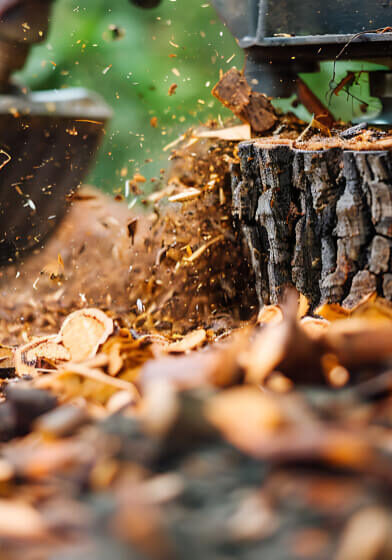
If multiple stumps are involved, take advantage of sequencing. It is faster and cleaner to grind nearer the street first, let the loader pick up chips as it goes, then move inward with fewer trips across grass. On commercial sites with 30 or 40 stumps, we often run two machines in leapfrog fashion. One opens the next stump while the other finishes depth and cleanup. That pattern trims hours without rushing the cut, and it halves the tracking over sensitive areas.
What clean actually looks like when the crew leaves
If the crew grinds, scoops out the mulch, then backfills and rakes, you should be able to mow over the spot the same afternoon. Most stumps produce a surprising volume of chips, usually 1.5 to 2.5 cubic feet of grindings per inch of stump diameter, depending on depth and root spread. A 20 inch maple stump can yield a third of a yard of material, sometimes more. Leaving all of that in the hole leads to settling. Wood chips decompose and collapse. Two months later you have a saucer where there should be a flat surface.
A clean finish looks like this: the bulk of chips are removed and either hauled or neatly windrowed for your use, the hole is backfilled with soil to grade, and the area is raked smooth and tamped. On slopes, a crew should offer to place a small berm below the stump cavity so the first heavy rain does not scour away new topsoil. When the plan involves hardscape, the crew should leave the area low by the depth of your planned base, not flat with the lawn. That bit of communication avoids a second excavation charge later.
Homeowners often want to keep the chips as mulch. They are useful under shrubs and along fence lines, but they are not good backfill. Fresh chips tie up nitrogen as they break down. Spread them as mulch at two to three inches deep, and keep them pulled back from house siding and deck posts. Chips hold moisture and can encourage rot if packed against wood structures.
A seasoned approach to choosing grinding or full removal
Most stumps can be ground with excellent results. There are times when full removal makes more sense. The decision depends on intended use of the space, species, and site constraints.
Consider choosing full removal when:
- You plan to pour a footing, build a retaining wall, or install a hot tub pad where the stump sits.
- The species is known for aggressive surface roots that run far beyond the stump, like poplar or willow, and you want to plant a tree in the same spot soon.
- The stump is entangled with heaved concrete or masonry that must be reset, and you need access beneath it.
- A fungal pathogen is confirmed in the root system and you want to replant a susceptible species nearby.
- You have heavy clay that stays wet and you want to avoid long term settling as grindings decay.
That list is not absolute. I have ground oak stumps under future patios by taking the depth to 18 inches, stripping all chips, importing compactable fill, and compacting in 4 inch lifts. It worked, but it took more time up front and careful base prep by the mason.
Integration with broader Tree Removal Services
Stump work is rarely the only need. After hazardous removals, we often schedule Stump Removal & Grinding along with Tree Pruning & Crown Shaping on the remaining canopy. A yard looks unfinished if a stump is gone but low limbs still scrape the garage. On commercial campuses, we blend stump grinding with Tree Cable and Bracing on heritage trees that remain, so the wind load is managed across the site. That combination keeps the whole landscape safe and cohesive.
Emergency Tree Services add urgency. After a storm, crews might fell a split pine at 2 a.m. To clear a driveway, then return at daylight to grind the stump once utilities are verified safe. Flooded soils and storm litter complicate grinding. Chips will be wet and heavy, and pumping groundwater into a stump hole can turn it into a soup. The right move is sometimes to delay grinding 24 to 48 hours for drainage and cleanup, then return for a fast, clean finish. The customer sees a longer timeline but a better result, and the lawn avoids rutting that would take weeks to heal.
Dangerous Tree Assessment and Removal inform stump strategy
A stump tells a story. In Dangerous Tree Assessment and Removal, we cut face notches and see the wood up close. If the hinge shows dark stain from root rot fungi or the trunk is waterlogged and fibrous, a grinder will behave differently. Infected wood can smear, and chips may need to be hauled instead of spread to reduce inoculum near replacement plantings. If a stem failed because of root plate movement on saturated soil, grinding deeper in that zone can be smart to remove loosened lateral roots that might sprout if left.
On some removals, a stump is left higher than usual because of tensioned lean or utilities. The grinder then has to start with a higher face. That can slow production, since the machine will work more vertical wood before flattening. A good operator stages the cut by creating a bench at mid height so the cutting wheel stays stable. You will not see that if you are not watching the technique, but you will feel it in the evenness of the finish.
FireSmart Tree Services and stumps
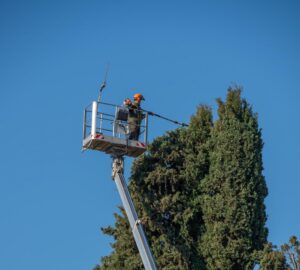
Where wildland urban interface conditions exist, FireSmart Tree Services shape how we treat stumps and logs. Grinding and removing chips reduces contiguous fuels near structures. In high fire risk seasons, we avoid leaving chip piles against fences or under decks. Some regions restrict grinding during red flag days because of spark risk. Crews adapt by using water misters at the cutting head, keeping extinguishers on the machine, and shutting down if winds climb into unsafe ranges. If you live within a zone that requires defensible space, ask the arborist to align stump locations and grinding depth with your fuel management plan. That might mean grinding old shrub stumps and roots along house walls to eliminate hidden ember beds.
How much time and what it typically costs
Time on site depends on access, species, and finish quality. A single 18 inch diameter stump in an open front yard can be ground and cleaned in 45 to 75 minutes with a mid size unit. Add 20 to 30 minutes if chips are hauled off and soil is imported and leveled. Tight access or patios close to the stump can double the time, because the operator takes shallower passes and uses mats to protect surfaces.
Pricing varies by region and the scope of cleanup. Common residential rates range from about 8 to 14 dollars per inch of stump diameter at grade for standard grinding and basic rake out, typically with a minimum service fee for small jobs. Full chip removal and soil backfill can add 75 to 200 dollars per stump, again depending on volume and distance to the truck. When multiple stumps are present, per inch prices usually drop for the second and third stump because mobilization is already covered. If hidden debris like rebar or concrete is embedded in the wood, expect a change order. Teeth are not cheap, and a single strike can dull a set.
Ask for clarity on three line items. First, the measured diameter, and whether it includes surface root flares. Second, the target depth. Third, the handling of chips. A transparent proposal spells those out and ties them to your intended use of the space.
What your Certified Arborist should ask before grinding
A Certified Arborist Consultation is more than a sales visit. It is the best moment to catch surprises early. Expect the arborist to ask about irrigation, lighting, pets, and neighbor access. If a fence panel can be lifted to bring in a more efficient grinder, that may save you money and time. If you have allergies or concerns about dust, the crew can bring a water attachment and a fine mesh curtain. If you plan to plant another tree in the same spot, species selection matters. Planting a spruce where a spruce stump just decomposed can invite pest pressure. Switching genera improves long term health.
When the stump is from a tree removed for disease, such as a pine with bark beetle or an ash with emerald ash borer, the consultation should cover sanitation. Grinding reduces bulk but does not sterilize chips. If you intend to replant a susceptible species, have the crew remove chips and pull key lateral roots in the planting zone. For Dutch elm disease, for example, avoiding elm replanting nearby for a few years is prudent.
Site constraints that change the playbook
Side yards tell the truth. A 30 inch gate limits machine options. Pavers with thin bedding shift https://andrespzew473.iamarrows.com/spotless-finish-stump-removal-grinding-and-backfill under repeated passes. Septic fields do not tolerate heavy loads. In winter, frozen ground can actually be an ally, stiffening turf so tracks do less damage. In spring thaw, those same tracks can rut six inches deep. Crews work within those constraints by bringing lighter machines, laying ground protection mats, and sometimes staging the job for drier weather if you wish to preserve a pristine lawn.
Species and age matter. Old oaks with heartwood intact can spark if the teeth hit silica nodules or hidden nails from decades ago. Poplars tend to fray, making a bit more mess around the edges that needs raking. Spruce and pine grind easily when fresh but can become sappy and clog screens when half dried. In drought years, even typical grinders might bog in a locust stump unless the operator feathers the feed and lets the teeth bite rather than rub. These tradeoffs are routine to a practiced crew and are invisible to most clients other than in the speed and neatness of the final grade.
Preparing your property so the crew can be in and out
A few small steps can save an hour of labor and keep the finish crisp.
- Mark and flag any irrigation heads or shallow drip lines in the work zone, and shut off the system the night before.
- Move lawn furniture, toys, and grills at least 15 feet from the stump area to create clear working room.
- Unlock side gates and, if possible, remove a fence panel agreed upon in advance to allow better machine access.
- Identify and point out any underground features like septic lids, French drains, and low voltage lighting cables.
- Keep pets indoors or secured, and let neighbors know about brief noise so a car is not left blocking access.
Most crews arrive with plywood to protect turf on tight turns and tarps to consolidate chips. If you have a preferred chip dump spot, choose a location with solid ground and short push distance so loaders do not track across sensitive beds.
How stump removal interacts with replanting and soil health
Grinding leaves a blend of soil and wood fibers. That mix is loose, holds air, and drains fast, which sounds good for roots but can backfire. As chips decompose, they rob nitrogen from the soil. If you plan to plant turf, strip most chips, backfill with mineral soil, and top with a compost rich topsoil layer. For new trees, it is better to plant two or three feet offset from the old trunk center if possible, outside the highest wood chip concentration. Dig a wide, shallow bowl, and resist the urge to amend only the planting hole. Keep the backfill consistent with native soil so roots do not circle in a comfort zone.
On heavy clay, grinding can be a chance to improve a spot that was compacted by the old tree’s traffic area. After chip removal, break the subsoil gently with a mattock to a few inches, then add soil and rake to shed water away from foundations. With trees removed for root disease, avoid wood chip compost in the near term where you plan to replant.
How we keep things safe for your property and our crew
Chains and spinning steel demand process. Crews wear eye and ear protection, chaps for saw work, and hard hats if there is any overhead hazard. The grinder has guards and an operator station with a deadman switch. We set a perimeter with cones when grinding near sidewalks and cover nearby windows with plywood if chips are likely to reach them. On windy days, a mesh screen at the grinder’s discharge side keeps sawdust from peppering cars and neighboring yards.
On a few jobs each year, we uncover tie backs, bolts, or concrete in the stump, leftovers from an old Tree Cable and Bracing system or landscape feature. We stop, cut out the obstruction, and check the teeth before resuming. A single carriage bolt can cost a full set of teeth if the operator keeps pushing.
Real world examples
A family in a 1950s neighborhood called after removing a row of honey locusts along a driveway. The stumps were 16 to 22 inches, two feet from the asphalt edge. They wanted the space ready for a new curb and a 2 inch asphalt overlay. Grinding alone would have left loose material under the future edge. We ground to 16 inches, peeled back the driveway edge in two places to chase laterals that ran under the base, stripped all chips, and compacted angular stone in lifts. The paving crew rolled in the next morning and laid a clean edge without a soft spot. That is fast and clean, but it required talking to the pavers a week before the grinders showed up.
On a lake property, a windstorm uprooted a spruce and left a tilted root plate as tall as a pickup hood. Emergency Tree Services cleared the trunk on day one. Grinding had to wait because the soil was saturated. Two days later, when water receded, we cut the plate into sections, tamped the cavity, ground the remaining buttress roots, and contoured the shore side to shed runoff away from the boathouse. The owner avoided a muddy scar and erosion that would have taken a season to settle.
Permits, bylaw quirks, and neighbor goodwill
Some cities require permits for Tree Removal Services above a certain trunk diameter but do not regulate stump grinding. Others restrict grinding noise to business hours or ask for traffic control if a machine will work near the street. If a stump is within the public right of way, the city may have a say in finish grade and species allowed for replanting. Your arborist should know the local patterns. At minimum, expect them to guide you on simple steps like notifying adjacent owners when work will partially block a shared lane for an hour.
Neighbors appreciate courtesy. Chips can travel. When we grind near a white stucco wall, we hang a tarp and keep a broom handy. If a tidy hedge is within range, we ask before we clip any errant branches for access. Small gestures keep a fast job from turning into a long conversation.
Aftercare and what to watch over the next season
Even with aggressive chip removal and backfill, minor settling happens. Check the area four to six weeks after the job, especially after a hard rain. If a shallow depression forms, top up with a little soil and reseed. If you smell sour rot, it likely means too many chips stayed in the top layer in a wet spot. Rake out and blend with mineral soil to correct it. Watch for sucker sprouts around species like poplar or elm. Grinding reduces but does not always eliminate the plant’s urge to send up shoots from lateral roots. Regular mowing or a directed spray with an appropriate herbicide in compliance with local regulations will control them.
When pruning the trees that remain, consider Tree Pruning & Crown Shaping to balance the canopy now that a large stem is gone. Sun patterns change after removals. Limbs that grew in shade may now bear more wind and sun. A skilled prune reduces breakage risk and refreshes the look of the whole yard.
When a stump refuses to be simple
Every few months a stump surprises even veteran crews. We once found a cast iron drain embedded in a willow stump, likely swallowed as the tree grew around an old pipe. Another time, a customer had spread gravel into a low spot years earlier, right where the grinder would cut. The first pass showered sparks. We stopped, shoveled out the gravel, and reset the plan. Surprises are not failures, they are tests of process. The difference between a rough day and a professional job is how quickly the crew adapts and how clearly they explain the change to you.
If you only remember one checklist
Here is the short version that keeps projects on track.
- Confirm utility locates are complete, and point out private lines like irrigation and lighting.
- Decide ahead of time whether you want chips hauled or saved, and where to place any kept mulch.
- Share your next use for the spot so the crew grinds to the right depth and finishes to the proper grade.
- Arrange access, including moving vehicles and unlocking gates, and consider a temporary fence panel removal if it helps.
- Walk the job with the arborist at the end, and ask about aftercare, settling, and any replanting guidance.
The value of an integrated team
A company that handles Dangerous Tree Assessment and Removal, Stump Removal & Grinding, and follow up pruning with Certified Arborist Consultation will look at your site as a complete system. They can cable a weak union on the oak you love, remove the hazardous poplar next to it, grind that stump, and shape the remaining canopy so wind loads are better distributed. They can work within FireSmart Tree Services principles so your yard not only looks good but also meets a defensible space plan. They can show up at 7 a.m. After a storm for Emergency Tree Services, then return with the grinder and soil once the site is safe. Fast and clean is not just about the machine. It is about judgment, sequencing, and listening to what you want the space to become.
If you are interviewing providers, ask them to describe the last time a stump job did not go as planned and what they did. Listen for details about utilities, soil, species, and finish quality. Those are the clues that your yard will not be their training ground. With the right questions and the right crew, the stump that has been in your way for years can be gone in an afternoon, with the ground ready for whatever comes next.
Ace Tree Services Ltd.
Name: Ace Tree Services Ltd.Address: 4656 Wallace Hill Road, Kelowna, BC
Postal code: V1W 4C2
Phone: 250-212-9593
Website: https://acetree.ca/
Hours:
Monday: 7:00 AM - 5:00 PM
Tuesday: 7:00 AM - 5:00 PM
Wednesday: 7:00 AM - 5:00 PM
Thursday: 7:00 AM - 5:00 PM
Friday: 7:00 AM - 5:00 PM
Saturday: 7:00 AM - 5:00 PM
Sunday: Closed
Open-location code (plus code): RHF8+8G Kelowna, British Columbia, Canada
Map/listing URL: https://www.google.com/maps/place/Ace+Tree+Services+Ltd./@49.8232606,-119.4337283,659m/data=!3m2!1e3!4b1!4m6!3m5!1s0x537d8b1d074815c5:0x450b88afa7a41435!8m2!3d49.8232606!4d-119.4337283!16s%2Fg%2F11ydkpnh22
Embed iframe:
Ace Tree Services Ltd. provides professional tree removal, pruning, stump grinding, emergency response, and arborist consultations for properties in Kelowna and across the Okanagan Valley.
The company works with homes, commercial properties, and municipal settings where tree work needs to be planned carefully around buildings, fences, driveways, landscaping, and other site constraints.
Based in Kelowna, the team is positioned to help nearby neighbourhoods and surrounding Okanagan communities with routine tree care and time-sensitive storm cleanup.
Customers looking for careful tree work often want a crew with certified arborist training, insurance, and a methodical approach to higher-risk removals.
Services also include dangerous tree assessment, cabling and bracing, and wildfire risk reduction tree work for properties that need longer-term planning.
To request a quote or discuss tree care options, call 250-212-9593 or visit https://acetree.ca/.
A public map listing is available to help customers confirm the business location and get directions before a site visit or estimate.
For Kelowna property owners who need pruning, removals, or emergency tree help, a local tree service can make it easier to schedule site-specific recommendations and cleanup.
Popular Questions About Ace Tree Services Ltd.
What services does Ace Tree Services Ltd. provide?Ace Tree Services Ltd. lists tree removal, stump removal and grinding, tree pruning and crown shaping, emergency tree service, arborist consultation, dangerous tree assessment and removal, cabling and bracing, and wildfire risk reduction tree work.
Who does Ace Tree Services Ltd. serve?
The company describes its work as serving homes, businesses, and municipalities in Kelowna and across the Okanagan Valley.
Is emergency tree help available?
Yes. Emergency service is listed for downed or uprooted trees, dangerous tree assessment, stabilization work, and branch cleanup. If a tree is near power lines, the safest first step is to stay clear and contact the utility provider before any tree work begins.
Do I always need a permit to remove a tree?
Not always. Permit requirements can depend on where the tree is located and whether it is near a creek, lake, steep slope, or another protected area. It is best to check local rules for the specific property before removal work starts.
How deep does stump grinding usually go?
Standard stump grinding is typically described as going about 6 to 12 inches below ground level, which is often enough for grass or surface landscaping. Deeper grinding may be possible when site plans call for it.
How much of a tree can be safely removed at one time?
That depends on the species, age, health, and structure of the tree. In practice, good pruning is usually about removing the right limbs for health, clearance, and structure rather than chasing a fixed percentage.
What are common signs that a tree may be dangerous?
Large dead limbs, visible cracks, a new lean, root damage, canopy dieback, or storm-related damage can all be warning signs. Trees near structures deserve extra attention when any of those issues appear.
What is cabling and bracing in tree care?
Cabling and bracing are support systems used to reduce the risk of failure in trees with structural weaknesses that may still be worth preserving. They are generally used to add support, not to replace good assessment and ongoing maintenance.
How do I contact Ace Tree Services Ltd.?
Call 250-212-9593.Website: https://acetree.ca/.
Landmarks Near Kelowna, BC
Downtown KelownaThe downtown core is a practical reference point for lakefront neighbourhoods, mixed-use streets, and central residential properties. If your property is near downtown, tree pruning, removals, and cleanup can be planned around tighter access and nearby structures.
Knox Mountain Park
This well-known park north of downtown is a recognizable landmark for nearby homes and hillside properties. If you are close to this area, ask about tree assessment, trimming, or removal work suited to sloped sites.
Mission Creek Greenway
The greenway runs through several parts of Kelowna and is a useful landmark for nearby residential areas. If your property borders or sits near this corridor, site-specific tree planning is especially important.
Pandosy Village
Pandosy is one of Kelowna’s most recognizable neighbourhoods and a common reference point for south-central properties. If you are nearby, request help for pruning, removals, or storm cleanup around homes and small commercial sites.
Rutland
Rutland is a major east Kelowna neighbourhood with a mix of residential and local commercial properties. If you are located in or near Rutland, tree work can be scheduled for both routine maintenance and urgent situations.
Landmark District
This central business-focused area is a practical landmark for offices, service properties, and nearby residential streets. If your site is near the district, ask about careful tree work around parking, access lanes, and built-up lots.
Kelowna’s North End
The North End sits on the edge of downtown and is a useful reference for nearby homes, industrial sites, and commercial properties. If you are in this part of the city, request tree care based on the layout and constraints of the lot.
Airport District
The Airport District is a recognizable north Kelowna reference point for surrounding properties and access routes. If you are in this area, ask about tree services for residential acreage, commercial sites, or roadside cleanup needs.
Glenmore & Dilworth
These established Kelowna neighbourhoods are useful landmarks for central and north-central service calls. If your property is nearby, pruning and removal work can be tailored to mature trees and established landscapes.
Highway 97 Corridor
Highway 97 is one of the city’s main travel routes and a common way to describe location within Kelowna. If your home or property is just off the corridor, a clear landmark reference can help speed up quote scheduling and site planning.